01What happened
The story, straight
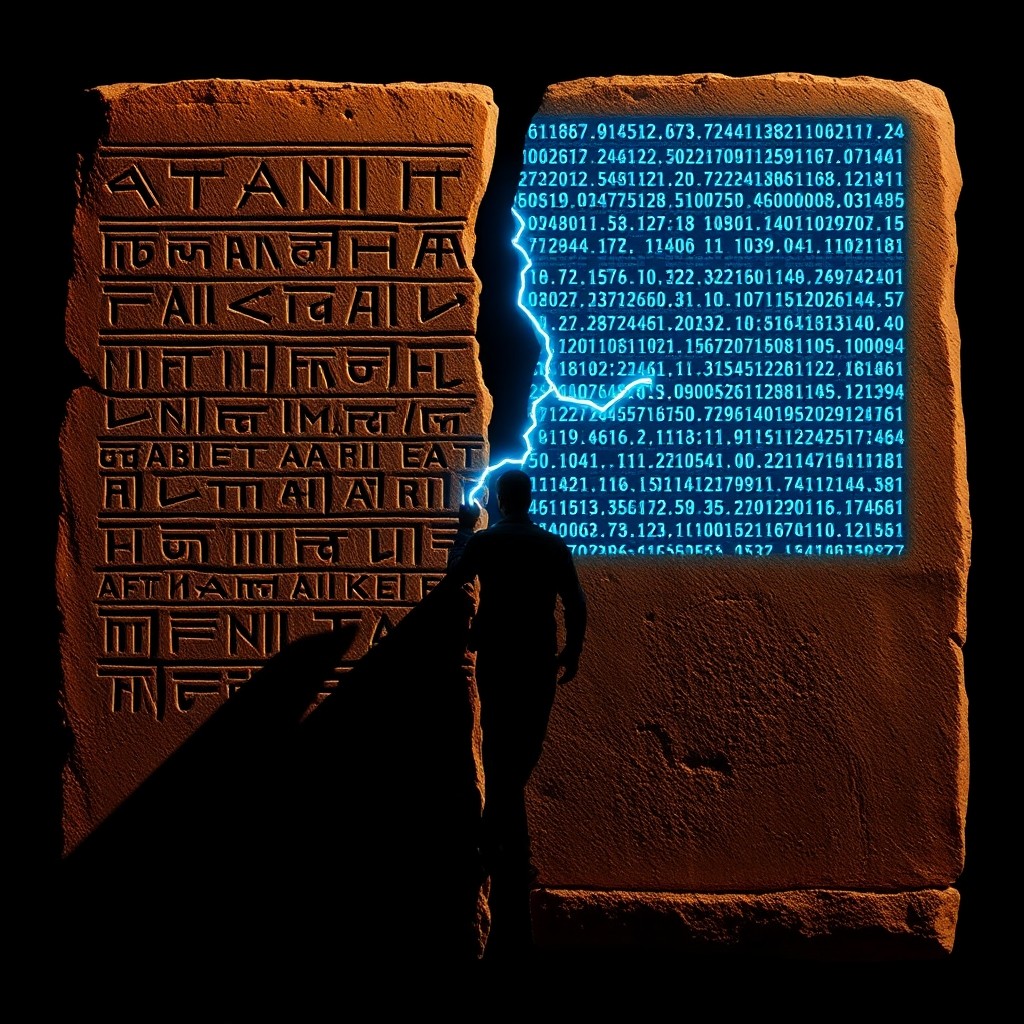
Tom Di Mino, a self-taught AI engineer and amateur linguist based in the Hudson Valley, claims to have deciphered Linear A, an undeciphered Bronze-age Minoan writing system that has stumped experts for over a century. Di Mino began working on the problem in January 2026 and says the major insight came to him on May 22. He believes Linear A maps to an extinct Semitic language that was a precursor to biblical Hebrew, similar to how Latin preceded Italian. His claims are currently under review by linguistics experts at Rutgers and Cambridge.
Tom Di Mino, a self-taught AI engineer in the Hudson Valley, says he cracked Linear A — an undeciphered Bronze-age writing system that's been a puzzle for over 120 years. He started in January, says the breakthrough hit him May 22. His theory: Linear A maps to an extinct Semitic language, a precursor to biblical Hebrew. Rutgers and Cambridge linguists are reviewing his claims now.
02Spread timeline
Where it actually started
04What's solid, what isn't
Claims by status
- Tom Di Mino, a self-taught AI engineer, claims to have deciphered Linear A.
- His claims are being reviewed by linguistics experts at Rutgers and Cambridge.
- Di Mino began working on the problem in January 2026.
- Whether Linear A actually maps to an extinct Semitic language precursor to biblical Hebrew.
- Whether the decipherment will survive expert peer review.
- Rutgers and Cambridge linguists have not yet published their assessment.
05Why it matters
The editorial take
If verified, this would be one of the most significant breakthroughs in historical linguistics in decades. When the related Linear B script was deciphered in 1952, it made the front page of the New York Times. The claim is currently unverified — expert review at two major universities is underway, and the source note acknowledges the author knows Di Mino socially.
if this checks out it's a once-in-a-generation linguistics event. the last related script, Linear B, cracked in 1952, made the NYT front page. big if — Rutgers and Cambridge are reviewing, and the source admits he knows Tom personally. wait for the peer review.